Fly Fisher Fitness Connection
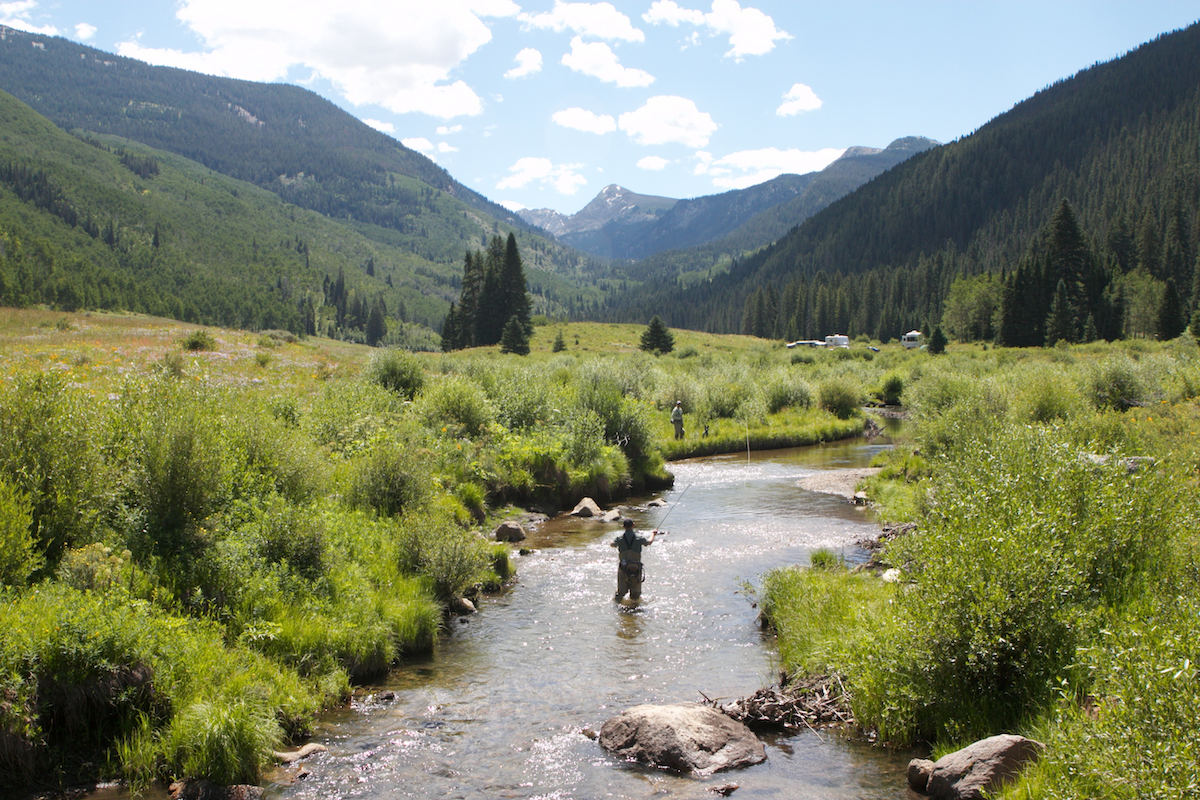
Fly fisher fitness connection. There is a clear relationship, yet the connection is often brushed aside or overlooked.
When I retired at age sixty-four, I began fly-fishing in earnest and joined fly-fishing clubs to accelerate my learning. The Fly Fisher Fitness initiative grew out of what I observed.
Viewing fly-fishing clubs and the broader fly-fishing community from the inside, I saw affluent, well-equipped fly fishers impoverished by physical limitations. Age creep had indiscriminately pulled some of the wisest, most skilled anglers downward—sometimes out of the game altogether. I saw vigor wane. Strength erode. Balance and coordination falter. Foundational capacities quietly lost. Poor thermoregulation—the ability to stay warm—made outings unbearable.
I discovered that fly fishers—the ultimate outdoors people—are only ultimate up to a point.
I know what aging feels like. I’m aging too. It is hard to feel strong, adventurous, resolute, and action-oriented when pain and fatigue begin to narrow your world. But we do not have to accept or acquiesce to decline.
I am not farsighted or unusually gifted with intellectual, emotional, or sensory awareness. These observations emerged from anxiety. My youth was ambushed—forced to grow up too quickly—by my fifty-three-year-old father’s fatal heart attack.
At fifteen, I lived on alert for signs of premature aging and early death. With heightened awareness, I searched for ideas, strategies, and workarounds that might help me avoid the same fate. The seed was planted deeply, continuously activating a fight-or-flight response. I was anxious, fearful, emotional—easily triggered into shutting down or overreacting.
As I grew older, I found comfort in exercise. Movement seemed to bind and secure my anxiety. Later, I learned that moving toward what disturbs you—becoming active and doing something about it—can reduce its power.
That is how exercise took hold and began shaping my beliefs, decisions, and actions.
Over time, the physical decay I witnessed in fly-fishing clubs began to mirror my own premature aging. You could say I had flashbacks—not PTSD, perhaps, but visceral and emotional nonetheless.
As I noticed my decline running parallel to that of my fellow fly fishers, I began to wonder whether acting deliberately might change the trajectory of my aging. I started to experiment, taking exercise beyond habit and into intent. I became certified as an Older Adult Fitness Trainer, and I began to train.
Through careful study, experimentation, failure, iteration, and lived experience, I developed a routine that kept me fly-fishing longer and stronger than I had been in my forties.
Fly Fisher Fitness, Creating and Sharing
That was when I knew I had something to share—to write and speak about. Fly Fisher Fitness connection is about what is possible for aging fly fishers.
I employ four components in my training lifestyle, all geared toward fly-fishing performance:
- Exercise
- Nutrition
- Sleep
- Mindset
Training is a systematic, intentional effort designed to spur adaptation and develop specific capacities. Consider an Olympic hopeful. They do not exercise; they train. Everything they do aligns with a performance plan. That is the approach I now take—using specific movements to activate specific physiological mechanisms and processes.
Two features are essential:
- Exercise methodology aligned with demand. What are you asking your body to do?
I am not an NFL center blocking at the line of scrimmage. As a fly fisher, I function as a rotational athlete, requiring stamina, endurance, pliability, balance, strength, power, and coordination. - Sufficient frequency and intensity. What results do you want to feel?
Training must activate pathways associated with survival, growth, and longevity.
You could also call this a longevity lifestyle. The goal is long-term durability—remaining resilient, muscular, energetic, strong, and vital; able to do the things you love regardless of age.
I have made fly-fishing my why. Outings serve as both practice and performance, informing me—by my own criteria—how I am aging.
Fly-fishing is bliss. It is finesse, restraint, and serenity more than bravado or conquest. Sunrise over a misty meadow stream. A trout sipping your fly, then its sudden dash, stripping line from the reel. Time stands still. Hearts pound. Hands shake. Later, the memory feels dreamlike. Every outing is different, and every one is a gift.
You want to return again and again—until you are one hundred years old.
To do that, you must train.
Tennis players, football players—every sport requires training. Simply playing the game is not enough to perform with speed, strength, stealth, and durability. The same holds true for fly-fishing. If you want to perform well for the long term, training is nonnegotiable.
Communing with the wild is fly fisher sustenance, offering deep repose and renewal. But the cost of admission is strength and endurance—an uncommon level of fitness. Few people recognize that physical training can be a pathway to this kind of fulfillment. Fitness is too often viewed as boring toil or athletic vanity rather than functional preparation. We overlook the fly fisher fitness connection.
To function well in any pursuit, you must be fit. And fitness—real fitness—requires training.
Fly fisher fitness is not merely relevant; it is required for participation. On the surface, one might argue that fitness matters only later in life. That view ignores the starting point and simply kicks the can down the road.
If you follow the script society offers, you will age like everyone else. You do not need an elaborate training program. You need only observe—and plan for what you refuse to become.
There is more detail in my book.
Ideas and support in our Newsletter.
Categorized in: Fly Fisher Fitness