
Fly-fishing for Reds in an Arctic Blast
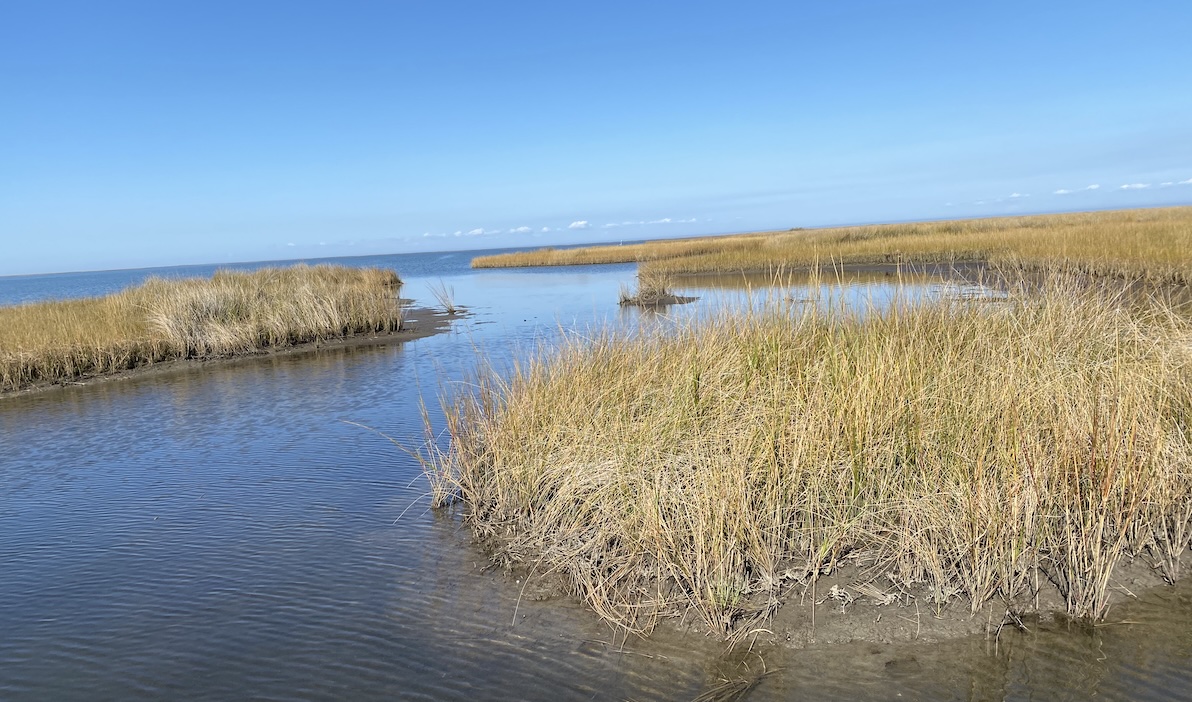
Spartina patens, architecture of the salt marsh
We didn’t plan to go Fly-fishing for Reds in an Arctic blast. In fact, we planned for warmth.
I’ve always viewed life as a sport—one that rewards attention, extra effort and adaptation. Growing older has shown me that survival is also a sport. Conditions change, margins narrow, and the cost of complacent contentment rises. Serious engagement is required.
What worked yesterday may collapse mid-stream today. Preparation only matters if it’s adaptable.
We thought we cleverly outwitted the cold, especially when we saw the one-day-out forecast for the Biloxi State Wildlife Management Area in St. Bernard Parish, Louisiana, calling for highs in the sixties and seventies. We packed accordingly—excited, we rerouted our annual December–January steelhead trip from Lake Erie to red-fishing in Louisiana. Our adventure appeared warm and sunny. It wouldn’t stay that way.
Fly-fishing is an enjoyable and invigorating challenge, why add variables that can impede success? On the first day we were immersed in everything we planned for, stripping off morning layers, we landed heavy fish—sheer bliss.
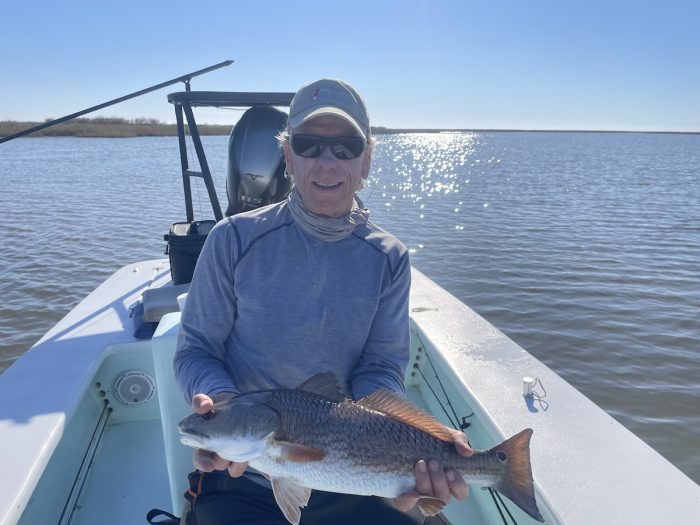
All fish are kept wet and released unharmed
But Nature, ever adept at testing our ability to maintain function despite external stressors—robustness—changed quickly. As if to thwart our intentions, an Arctic blast stalked us into the South. On day two, a combination of thirty-mile-per-hour gusts, near-freezing temperatures, and rain forced us off the marsh by midmorning. We do not quit easily, but one must know one’s limitations. Our guides, as hardy as they come, were also conscientious, and together we made the right decision.
A lunch of po’boys and gumbo warmed us as we planned the next day’s attempt.
We adapted. What most people fail to notice, or take for granted, is the adapting that occurs behind the scenes—or, more accurately, beneath the skin.
Fly-Fishing for Reds: Prepare Beyond Purchasing the Best Gear
Whether you are fly-fishing, hiking the Appalachian Trail, or even building a snowman, your physical condition matters.
In cold weather, the human body works harder to maintain core temperature. If you are in shape and well-conditioned, that steady influx of mild stress has prepared your body to endure higher-level challenges. A tuned cardiovascular system provides a reserve of sorts, helping to stabilize internal body temperature. You function better in demanding situations, and that same reserve aids recovery after disruption—resilience. It is a payoff, a return on investment for consistent effort. This is real wealth.
Being out of shape, however, can undermine your fly-fishing. In the cold, the body’s natural survival mechanisms prevail. Blood pressure rises as blood vessels constrict to conserve heat. Blood flow to the extremities is reduced to prioritize vital organs. Fingers and toes grow cold; arthritis may worsen, and joint pain may increase. Muscle mass matters. Muscles contract systemically in cold conditions to generate heat, increasing metabolic rate. With less muscle and insufficient conditioning, the body may struggle on several fronts. It becomes a matter of resource allocation—there is only so much to go around.
Externally, you may be demanding more focus, strength, and endurance from your body, while internally it is operating metabolically in overdrive to maintain vital functions and thermal stability. Performance may suffer as muscles and metabolism strain to meet both internal and external demands. You may feel light-headed or become more susceptible to falls. At best, you are depleted; at worst, exhausted.
Fly-fishing requires strength, endurance, and pliability—in a word, fitness. Sighting, catching, and landing fish weighing twenty pounds or more is physically demanding. Unpredictable conditions such as cold, wind, and rain add instability and chaos. A high level of fitness helps counterbalance that chaos.
Nature’s hazards have a way of finding weak points. That is the crux of fly-fishing, the outdoor life, and aging. Crisis finds you as you are, not as you wish you were.
The start of our third day was rough. The wind still whipped in the twenty-mile-per-hour range, and temperatures crept upward at glacial speed. Our ride out to the bayou/marsh—twelve nautical miles—was a cold, windy slog, slamming through the chop under an incessant salt spray.
Temperatures eventually rose, though not enough to shed layers. Bottom sediments were agitated and held in suspension, requiring strain and intense focus to sight fish. With added effort, we landed them. On the return ride through the Mississippi Sound, the water flattened, but we had to add layers to stay warm.
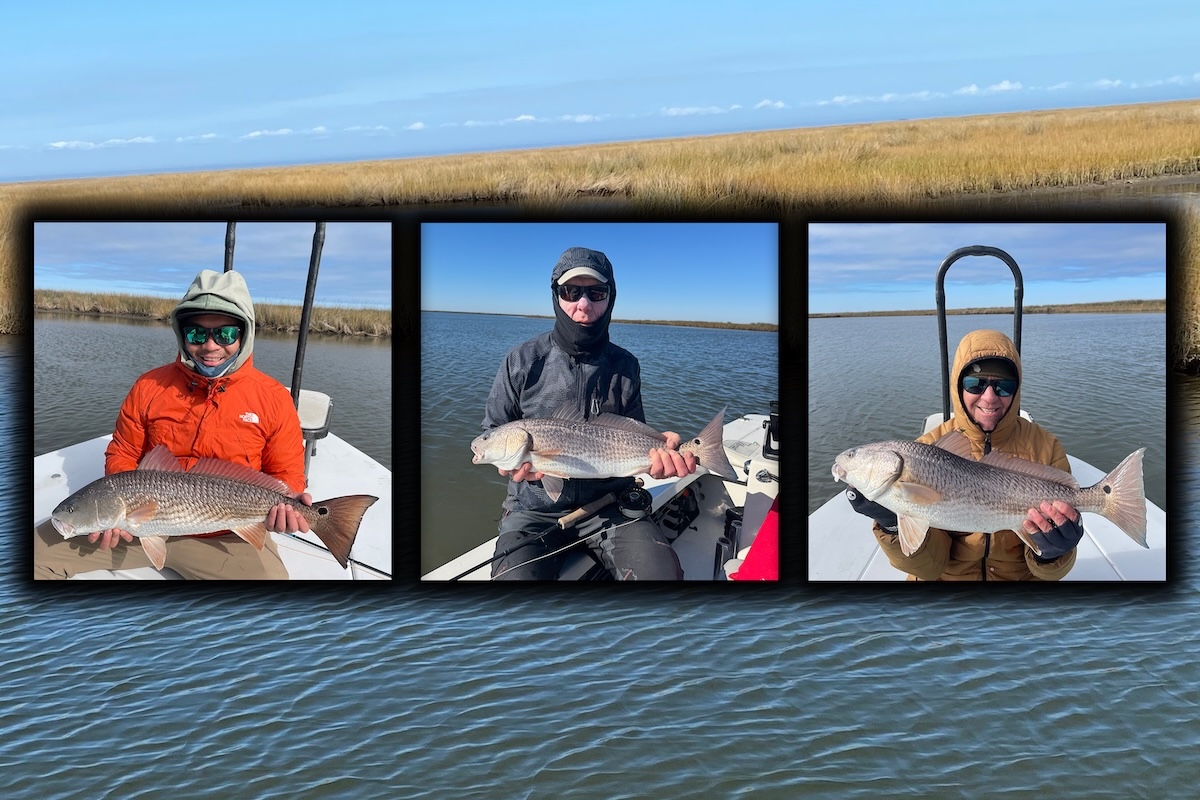
Fly-Fishing for Reds: The Takeaway
Planning is necessary, but it must remain pliable. Work with what you have and keep moving. Tighten your Grundens straps and proceed with confidence, joy, and gratitude. You’re playing on the best turf Nature has to offer—no foul lines, no dugouts, no guarantees. The field changes. Your target can see you. You adapt, or you get skunked.
Join the game as you are. The fish do not know how old you are. The only test is capability. Immerse yourself and let action reveal what needs attention. Failure is not prophecy. Where you are right now is simply information. What matters is that you keep growing. Active, forward motion beats decline infused with complacency and inactivity—every time.
Categorized in: Adventures